
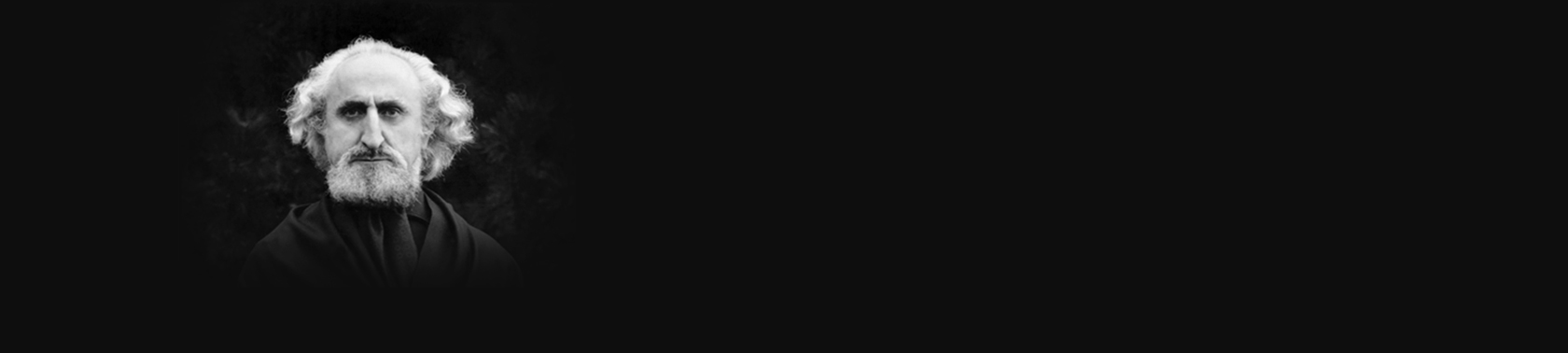

Être normal, c’est être homogène, et être homogène, c’est avoir un centre. Un homme normal est un homme dont les tendances, si elles ne sont pas tout à fait uniformes, sont au moins concordantes, c’est-à-dire suffisamment concordantes pour transmettre ce centre décisif que nous pouvons appeler le sens de l’Absolu ou l’amour de Dieu. The tendency towards the Absolute, for which we are made, is difficult to realize in a heterogeneous soul—a soul lacking a center, precisely, and by that fact contrary to its reason for being. Such a soul is a priori a “house divided against itself”, thus
destined to collapse, eschatologically speaking.
The anthropology of India—which is spiritual as well as social—distinguishes on the one hand between homogeneous men whose centers are situated at three different levels,1 and on the other hand between these men taken as a totality and those who, having no center, are not homogeneous; 2 it attributes this lack either to a degeneration or to a “mixture of castes”—especially those castes that are furthest removed from each other. But it is of the natural castes, not the social ones, that we wish to speak here: the former do not always coincide with the castes representing them socially, for the institutional caste allows for exceptions, inasmuch as it becomes numerically very large and thereby includes all human possibilities. Thus, without wanting to concern ourselves with the castes of India, we shall describe as succinctly as possible the fundamental tendencies which they are meant to transmit, tendencies which are found wherever there are men, with various predominant traits according to the nature of the group…
Le texte ci-dessus est tiré du chapitre 1 du livre To Have a Center: A New Translation with Selected Letters (Avoir un centre : nouvelle traduction avec une sélection de lettres) de Frithjof Schuon © 2015 World Wisdom Inc. Tous droits réservés. Pour usage personnel uniquement. www.worldwisdom.com