
Frithjof Schuon Archive

A Resource on Frithjof Schuon’s Life and Teachings
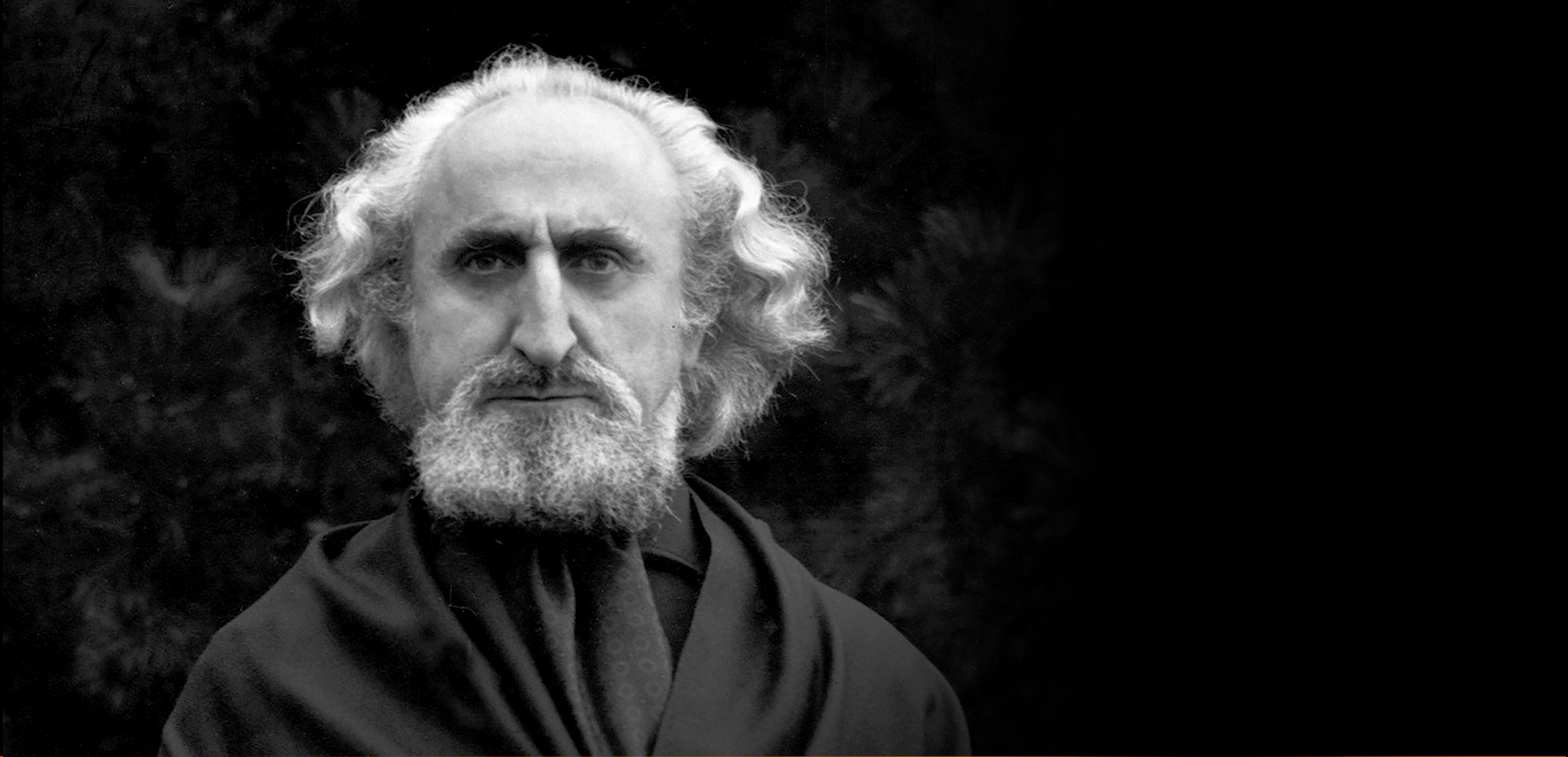
This site is the most comprehensive repository of information pertaining to the life and work of Frithjof Schuon (1907-1998); materials include published articles, personal correspondence, private papers, poems, photographs, and works of art.
Frithjof Schuon is the preeminent spokesman of a school of thought that focuses on the expression and explanation of the Perennial Philosophy. This philosophy expresses the timeless metaphysical truths underlying the diverse religions; its written sources include the revealed Scriptures as well as the writings of the great spiritual masters. Because these truths are permanent and universal, the point of view may thus be called “Perennialist.” The Perennial Philosophy is an important perspective that can inform the study of Comparative Religion, Anthropology, Art, Literature, and many related areas.
Schuon was a philosopher in the tradition of Plato, Shankara, and Eckhart, and he wrote over two dozen books on religion, metaphysics, sacred art, and the spiritual path. Describing Schuon’s first book, The Transcendent Unity of Religions, Nobel laureate T. S. Eliot wrote, “I have met with no more impressive work in the comparative study of Oriental and Occidental religion”, and world-renowned religion scholar Huston Smith said of Schuon, “The man is a living wonder; intellectually apropos religion, equally in depth and breadth, the paragon of our time”. Schuon’s books have been translated into over a dozen languages and are respected by academic and religious authorities alike. Schuon’s writings remain unequaled in setting forth the principles of perennialist thought as well as their applications on the spiritual, aesthetic, and other related levels.
Besides his accomplishments as an author, Frithjof Schuon was also a gifted artist and poet. His art and his poetry flowed naturally from his awareness of God’s Presence in creation. Catalogue notes from a museum display of Schuon’s art explain that “springing as they do from his rich and unique personality, Schuon’s paintings…have a rare value, not only as regards artistic merit but above all because of their gift for manifesting the human soul at its noblest and most beautiful—hence, as a vehicle for Truth.” The sense of the sacred figures as much in Schuon’s art and poetry as in his philosophical writings.
The story of Schuon’s life presented in these pages demonstrates how his own intellect, personality, and actions reflected the elevated metaphysics, spiritual insights, and artistic creations that comprised his body of work.
This online resource brings together, through a survey of his many-faceted dimensions, Frithjof Schuon’s important contributions to the manifestations of the timeless Truth.
Featured Books
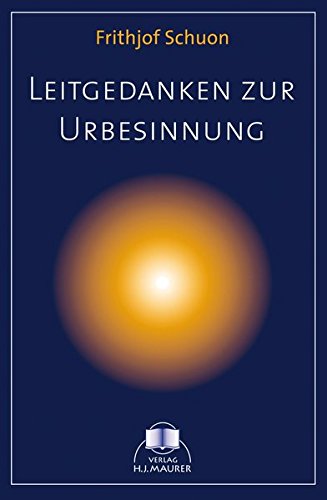
Leitgedanken zur Urbesinnung
Leitgedanken zur Urbesinnung is an early work by Frithjof Schuon, the internationally known and highly honored philosopher of religion.
Featured Poems
Adastra and Stella Maris: Poems by Frithjof Schuon-Society
Thou art a man, and among men thou must live;
Adastra and Stella Maris: Poems by Frithjof Schuon-Petition
Praise of God and thanks to God; and then another
Adastra and Stella Maris: Poems by Frithjof Schuon-Ridgepath
Man must cling to the essential
Featured Articles
A Profusion of Songs
This chapter from Michael Fitzgerald’s book Frithjof Schuon: Messenger of the Perennial Philosophy (World Wisdom, 2010), is a brief overview of how Frithjof Schuon came to write poetry, his reasons for doing so, and the nature of his work, including some examples of the Perennialist sage’s didactic verses.
Hommage d’un ami Indien
Signs of the Supra-Sensible: Frithjof Schuon on the Natural Order
Author Prof. Harry Oldmeadow states that the goal of this essay is to “provide a sketch, largely through direct quotation, of a few of the key principles and doctrines which govern Schuon’s understanding of the natural order.” This can assist us, because today we “witness a plethora of writings on the ‘ecological crisis,’ often well-intentioned and sometimes enlivened by partial insights, but fundamentally confused because of an ignorance of timeless metaphysical and cosmological principles. It has been the task of figures such as René Guénon, Ananda Coomaraswamy and Frithjof Schuon, authoritative expositors of the sophia perennis, to remind the modern world of those principles.”